

Termites don’t knock. By the time a door starts sticking or a skirting board feels oddly soft, they may have been working through your home for months. The frustrating part is that most of that activity happens where you will never look.
The good news is that termites are not magic. They need a way in, and the same handful of weak spots show up again and again. Knowing where those spots are gives you a real advantage, whether you are checking your own place or deciding when to book a termite inspection Melbourne homeowners can rely on.
Why Termites Are So Good at Staying Hidden
Subterranean termites live in underground colonies and travel to your home through soil. They avoid open air because they dry out quickly, so they build mud tunnels or move through concealed gaps instead.
That is why damage is often well advanced before anyone sees a thing. A termite can chew through the inside of a timber stud and leave a thin paper-like skin on the surface. The wall looks perfect while the wood behind it is mostly hollow.
A gap as thin as a pencil line can be enough for entry. That is worth remembering when you look at your home, because the entry points are rarely dramatic.
Common Hidden Entry Points Around a House
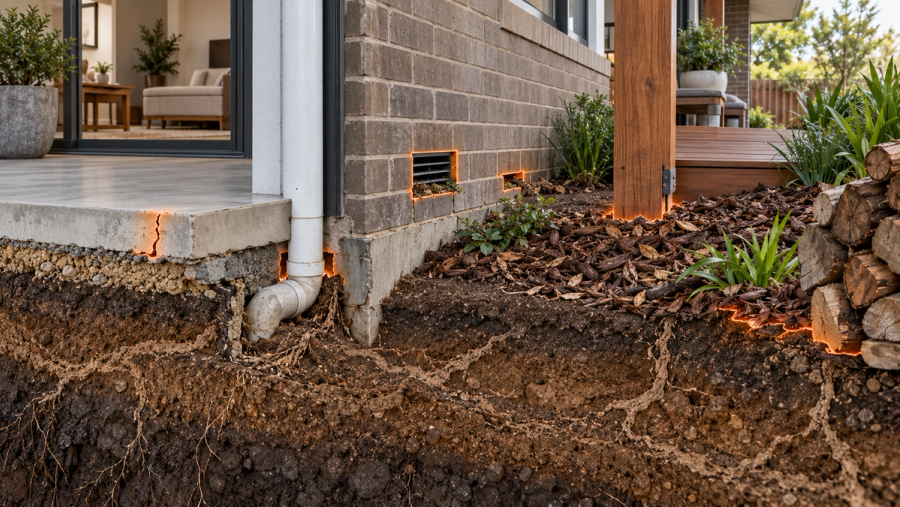
Slab edges and expansion joints
Concrete slabs crack and shift over time. Termites can slip through tiny cracks, and they can also travel along the joint where the slab meets the wall. If garden beds, paving or render hide the slab edge, that gap becomes a private entrance.
Plumbing and service penetrations
Pipes passing through a slab or wall leave small gaps around them. These are easy to miss, especially under bathrooms, laundries and kitchens. Moisture from minor leaks also makes these areas more attractive, since termites are drawn to damp timber.
Timber touching soil
Stumps, pergola posts, steps and fence posts that sit directly in the ground give termites a bridge straight to your house, especially if the fence connects to a wall. Even a timber garden edge pushed up against the cladding can do it.
Subfloor and weep holes
Homes with raised floors have a subfloor that is dark, damp and rarely visited. Blocked vents, stored boxes and old building offcuts left under the house create ideal conditions. Weep holes in brick walls can also be blocked by soil, which lets termites climb unnoticed.
Garden features and mulch
Thick mulch, stacked firewood and retaining walls with timber sleepers can hide the ground line. Termites love that kind of cover, and you lose the ability to see their tunnels.
Early Warning Signs Worth Knowing
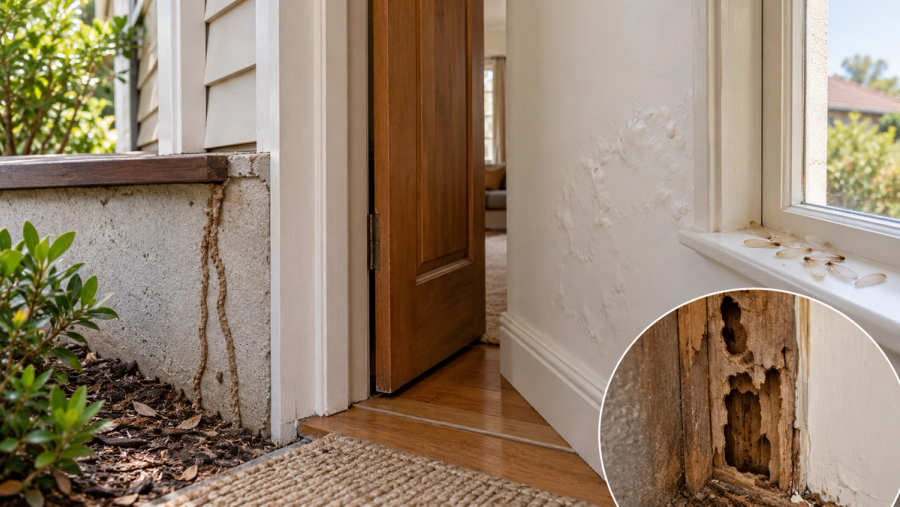
You do not need to be an expert to spot clues. A few things deserve attention:
- Thin mud tubes running up foundation walls, stumps or pipes
- Timber that sounds hollow when tapped with a screwdriver handle
- Paint or plasterboard that bubbles or ripples without an obvious leak
- Doors and windows that suddenly jam
- Small piles of discarded wings near window sills after warm, humid weather
Winged termites, often called swarmers, are a particularly useful warning. If you find wings indoors, there is a good chance a mature colony is nearby. Do not spray them and move on. Take a photo, leave the area undisturbed and get a professional to look at it.
What Happens During a Professional Termite Inspection
A proper termite inspection Melbourne property owners can trust is more than a quick walk around with a torch. A trained inspector works through the building methodically, inside and out.
They usually check the roof void, subfloor, wall linings, window frames, door jambs and the grounds around the property. They use tools such as moisture meters, sounding tools and sometimes thermal imaging cameras to pick up activity that eyes alone would miss.
The inspector also looks at conditions that invite termites, not just the termites themselves. That could mean poor drainage, a leaking tap, soil piled above the slab edge or timber stacked against the house. You get a picture of both the current state and the future risk.
Who Is Melbourne Termite Control?
Melbourne Termite Control is a local, family-run company that focuses on termite inspections and treatment across Melbourne and wider Victoria. By their own account, they have been doing this work for more than 30 years, and they describe themselves as fully licensed, accredited and insured.
Their technicians go beyond a visual check. They use moisture meters and a Termatrac T3i detector, which picks up termite movement thermally and helps pinpoint hidden nests, along with thermal imaging for trickier cases. Everything is photographed and written up in a report that lists findings, risk areas and next steps in plain language.
The company is also a member of the Australian Environmental Pest Managers Association (AEPMA) and says its work follows the relevant Australian Standards. If activity is found, they can move into options such as baiting, dusting and foaming, nest elimination or a chemical barrier, and they quote on the findings rather than selling a package up front. Their site also lists Victorian and national pest manager awards, which you can read about directly on their website.
What You Can Do Between Inspections
A professional visit is the backbone of protection, but small habits help in between.
Keep the slab edge visible and clear of soil, mulch and paving. Fix dripping taps and leaking downpipes quickly. Store timber, cardboard and firewood off the ground and away from walls. Make sure subfloor vents are open and the space underneath is dry.
Once or twice a year, walk around the house and look at the foundation line, the garage walls and the underside of verandas. It takes ten minutes, and you will get to know what normal looks like, which makes anything unusual stand out.
How Often Should You Book an Inspection?

Australian Standard AS3660 recommends a professional inspection at least once every 12 months. Homes with a history of termite activity, moisture problems or timber sitting in soil may need checking more often, and older homes with timber floors and mature gardens deserve extra attention. New homes with a chemical or physical barrier need regular checks too, because barriers are only as good as their upkeep.
Buying a property is another good moment. Termite damage is not always visible at an open inspection, and finding out afterwards can be expensive. A pre-purchase check gives you facts to negotiate with before you sign.
Open days show you fresh paint and tidy gardens. They tell you nothing about the timber frame, the subfloor or the roof void. That is where a pre purchase pest inspection Melbourne report earns its keep.
Spot the Gaps Before Termites Do
Termites win when nobody is looking. Every untouched slab edge, every hidden pipe gap and every piece of timber sitting in soil is an invitation. You cannot seal every possible entry yourself, but you can reduce them, watch for early signs and bring in an expert regularly.
If you have noticed anything odd, or it has simply been more than a year since anyone checked your home, now is a sensible time to act. Book a termite inspection Melbourne residents can depend on with Melbourne Termite Control. They offer same-day and next-day visits subject to availability, so you can find out what is really happening behind your walls before the damage decides for you.
Need Professional Termite Control?
Don't let termites eat away at your home. Get expert termite inspections and treatments from Melbourne's trusted specialists.
Book Your Service Now
Tell us what you need and we'll call you back to confirm a time. No obligation.
Don't Wait — Act Today
Melbourne homes face one of Australia's highest termite risks — and the structural damage they cause is not covered by home insurance. Whether you have spotted a warning sign or simply want peace of mind, our licensed Melbourne termite specialists are ready to help. Book a same-day or next-day inspection and receive a written report with clear options — no pressure, no jargon, no surprises.
Available Monday – Saturday: 7:00 AM – 7:00 PM | Emergency inspections available on Sundays