

You've just found mud tubes creeping up your foundation wall, or maybe your pest inspector mentioned the word "termites" and your stomach dropped a little. Either way, you're now staring down a decision that most homeowners only make once or twice in a lifetime, and you have no idea what's actually involved.
That's completely normal. Most people don't think about termite protection until it's suddenly urgent. If a chemical termite barrier treatment is on the table for your property, it helps to know what the process actually looks like before the technicians show up with their equipment.
What Is a Chemical Termite Barrier Treatment, Really?

At its core, a chemical termite barrier treatment creates an invisible zone of protection around and underneath your home using a liquid termiticide. Termites can't see it, smell it, or detect it as they tunnel through soil looking for timber to feed on. They simply walk through it, pick up the chemical on their bodies, and carry it back to the colony.
This isn't a one-and-done spray that kills termites on contact like you'd use on ants in your kitchen. It's a slow-acting treatment designed to spread through the colony over days or weeks, eventually affecting the queen and the nest as a whole.
Why Homeowners Choose This Method Over Baiting
Baiting systems have their place, but a lot of homeowners still prefer a chemical termite barrier treatment because it works continuously rather than relying on termites finding and feeding on bait stations first. Once the barrier is established correctly, it doesn't need termites to "discover" it. They walk into it simply by trying to enter your home.
Before the Technicians Arrive
Preparation matters more than most people expect. A thorough chemical termite barrier treatment depends heavily on access to the areas around your foundation.
You'll typically be asked to:
- Clear garden beds, pot plants, or mulch away from external walls
- Move outdoor furniture or storage away from the perimeter
- Ensure subfloor access points aren't blocked, if your home has one
None of this takes long, but skipping it can mean gaps in coverage later, which is exactly what you don't want when the whole point is an unbroken barrier.
What Actually Happens on Treatment Day
Trenching and Drilling Around the Perimeter
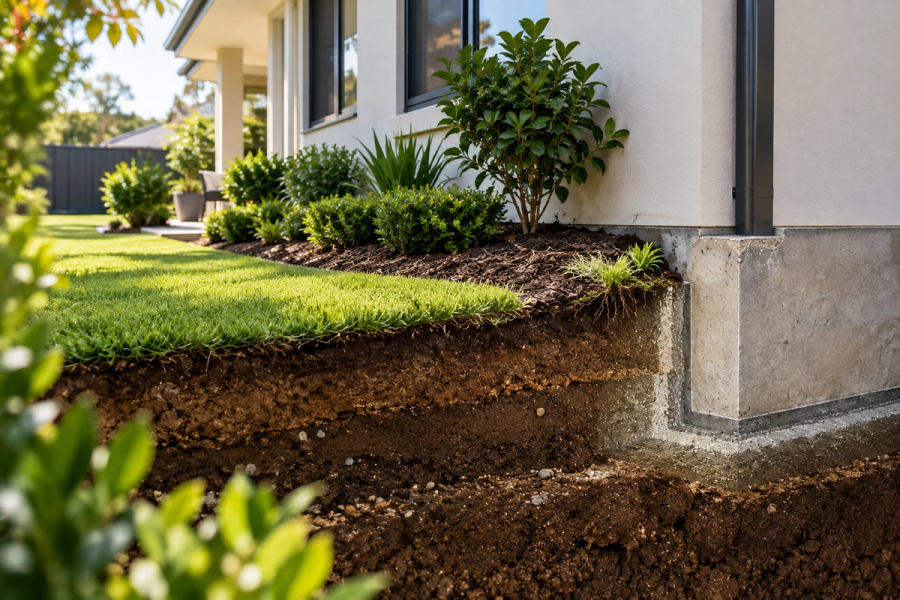
For a full chemical termite barrier treatment, technicians dig a trench along the external walls of your home, roughly 150 to 300mm deep depending on soil type and local conditions. In areas where concrete paths, patios, or driveways sit against the house, they'll drill holes at set intervals instead, since digging isn't possible there.
The termiticide is then applied into the trench or injected through the drilled holes, treating the soil so termites can't tunnel through undetected.
Treating Under Concrete Slabs
If your home is built on a concrete slab, the technicians will also drill through the slab itself at strategic points, usually along internal walls where termites are most likely to enter from below. This part sounds more invasive than it is. Holes are small, filled afterward, and barely noticeable once the job is done.
Subfloor Treatment for Homes on Stumps or Piers
For older homes with a subfloor, timber stumps, or raised piers, the approach is a little different. Technicians will spray the soil beneath the house directly, along with any areas where pipes or services pass through the ground, since these are common termite entry points that get missed by DIY efforts.
How Long the Treatment Actually Takes
Most residential jobs are completed in a single day, though larger or more complex homes with multiple levels, extensions, or difficult access might stretch into a second day. It's rarely the fast part of the process that matters though. It's what happens after.
After the Barrier Is Installed
The Drying Period and Why It Matters
Once applied, the termiticide needs time to bind properly with the soil. This is usually a few hours, but it can vary depending on the product used and the weather. Avoid disturbing the treated soil during this window, which means holding off on gardening or digging near the treated zone for a little while.
What You Won't See or Smell
One thing that catches people off guard is how uneventful it feels afterward. There's no lingering chemical smell in most cases, and visually, your garden beds look pretty much the same as before. That's actually a good sign. A properly installed chemical termite barrier treatment shouldn't disrupt your daily life at all.
How Long Does the Protection Last?
This is where expectations need to be realistic. A chemical termite barrier treatment typically lasts somewhere between five and eight years, depending on the specific product used, soil conditions, and how much the ground gets disturbed by renovations, landscaping, or even heavy rain events over time.
It's not a lifetime guarantee, and any technician worth their salt will tell you that upfront rather than let you assume it's permanent.
Why Annual Inspections Still Matter Even With a Barrier in Place
Here's something a lot of people don't realise. Having a chemical termite barrier treatment installed doesn't mean you can forget about termites altogether. Barriers can develop gaps over time due to soil movement, landscaping changes, or new construction work that disturbs the treated zone.
Annual inspections catch these issues before they become expensive problems, and most pest professionals will recommend this as standard practice rather than an upsell.
Is It Worth the Investment?
When you weigh the cost of a chemical termite barrier treatment against the potential cost of structural termite damage, which can run into tens of thousands of dollars in repairs, the barrier starts looking less like an expense and more like insurance you actually hope you never need to use.
Homes across Melbourne face genuine termite pressure given the local climate and soil conditions, which is exactly why proactive treatment tends to make more sense than waiting for visible signs of an infestation.
Working With Melbourne Termite Control
Not every barrier job is the same, and that's the part that gets glossed over in most quotes. A 1920s weatherboard on stumps in the inner north needs a completely different approach to a 2015 slab-on-ground build out in the growth corridors. Soil type shifts too, and reactive clay soils in parts of Melbourne move enough over the seasons to affect how a barrier holds up.
Melbourne Termite Control works through that detail before quoting rather than after. That means a proper site inspection first, identifying where your home is actually vulnerable, then matching the termiticide and application method to your build type and ground conditions.
What to Ask Before You Commit to Any Provider

Whoever you end up using, a few questions separate a thorough job from a rushed one:
- Which termiticide product are you using, and what's its expected service life?
- Will you be providing a written treatment plan and a site diagram showing treated areas?
- Does the work comply with the relevant Australian Standard for termite management?
- What does the warranty cover, and what would void it?
Good operators answer these without hesitation. Melbourne Termite Control provides documentation as standard, which matters more than people expect, especially if you sell the property later and a buyer's inspector asks for proof of treatment.
The Value of a Local Team
Termite pressure isn't uniform across the city. Suburbs with mature tree cover, older housing stock, or high water tables tend to see more activity than newer estates. A technician who works these areas regularly recognises the warning signs faster and knows which entry points to check first, rather than running through a generic checklist.
Getting Started With Confidence
Knowing what to expect takes a lot of the anxiety out of the process. Trenching, drilling, soil treatment, a short drying period, and then years of protection with the occasional check-up. That's really the whole picture.
If you're weighing up your options or want a professional to assess your property's specific risk factors, the team at Melbourne Termite Control can walk you through what a tailored barrier solution would look like for your home before any work begins.
Need Professional Termite Control?
Don't let termites eat away at your home. Get expert termite inspections and treatments from Melbourne's trusted specialists.
Book Your Service Now
Tell us what you need and we'll call you back to confirm a time. No obligation.
Don't Wait — Act Today
Melbourne homes face one of Australia's highest termite risks — and the structural damage they cause is not covered by home insurance. Whether you have spotted a warning sign or simply want peace of mind, our licensed Melbourne termite specialists are ready to help. Book a same-day or next-day inspection and receive a written report with clear options — no pressure, no jargon, no surprises.
Available Monday – Saturday: 7:00 AM – 7:00 PM | Emergency inspections available on Sundays